*The information provided in this blog is general in nature and should not be considered medical advice. Individual conditions vary, and proper evaluation is important. To receive accurate diagnosis and treatment, we encourage you to book an appointment with our experienced medical team.
How to Do Kegel Exercises for Premature Ejaculation Correctly?
You know you have premature ejaculation when, during sexual intercourse, you experience the unwanted or uncontrollable release of semen. PE is not considered a medical condition. But it can severely hurt the man’s confidence and sexual relationships.
Doctors believe that your sexual health is directly related to your physical health. A recent study showed that 44% of men with erectile dysfunction suffered from health conditions such as hypertension and diabetes. If you are experiencing these issues, there are natural ways to address them without the need for expensive medications. Kegel exercises can reinforce the pelvic floor and core muscles that surround and support the genital area. This way, the penis can maintain an erection and address any issues that occur with premature ejaculation.
Kegel Exercises For Men
For many, Kegel or pelvic floor exercises are the first-line treatment. The bulbocavernosus and ischiocavernosus muscles that surround the penis in the pelvic area become active during an erection. Kegel exercises are considered the best for premature ejaculation, as they are designed to strengthen these muscles.
How to do Kegel exercises for men?
- The first step to Kegel exercises is to find the right muscles. For this, tighten the muscles that you restrict when you want to stop urinating midstream or to keep yourself from passing gas. Typically, these actions use the pelvic floor muscles. To ascertain the action, squeeze as if you were trying to hold in urine and place a finger into your anus. If you feel a tightening around your finger, it means you are squeezing your pelvic floor muscles. While the exercises can be performed in any position, they are easiest when lying down, at least at first.
- Now that you have finished the initial step, it is time to perfect the technique. Tighten the pelvic floor muscles, hold for 3 seconds, then relax for 3 seconds. Try this for a while in a row, and when you feel your muscles getting stronger, you can do these exercises while standing, sitting, or walking.
- When you are performing these exercises, you tend to lose focus. But for optimal outcomes, it is best to find the pelvic floor muscles and tighten only these. Do not flex the muscles in the stomach, thighs or buttock area. Additionally, breathe freely during these exercises without holding your breath.
- You must complete at least 3 sets a day and work up to about 10 to 15 Kegels per set. Choose different positions each time. For instance, do one seated, another standing and one lying down. If you want a more professional plan, speak to your healthcare provider.
- Kegel exercises should become a part of your daily routine. Fit in the set of premature ejaculation exercises every time you are doing a routine task like making breakfast or brushing your teeth. Just before or during an activity, make it a point to squeeze your pelvic floor muscles to put some pressure on your stomach region. It could be laughing, coughing or heavy lifting.
Must Read : Premature Ejaculation Treatment: Can it be cured permanently?
Kegel exercises benefit for men
Men can improve sexual performance and bladder control with Kegel exercises when done correctly. It strengthens the pelvic floor muscles that support bowel and bladder function, which in turn affect sexual function. Practice these at any time, but ensure you do them correctly. Pelvic floor muscles are weakened due to a radical prostatectomy, an overactive bladder, aging, obesity, lots of coughing or straining due to constipation. Kegel exercises are highly beneficial if you have urinary incontinence, urge incontinence, fecal incontinence or dribble after urination. They help improve these conditions.
Types of Kegel Exercises
A mixed approach is always best when you practice Kegel exercises. Alternate between slow and fast movements to get optimal outcomes. This also ensures that your pelvic area gets the strength it requires.
1. Front-Up
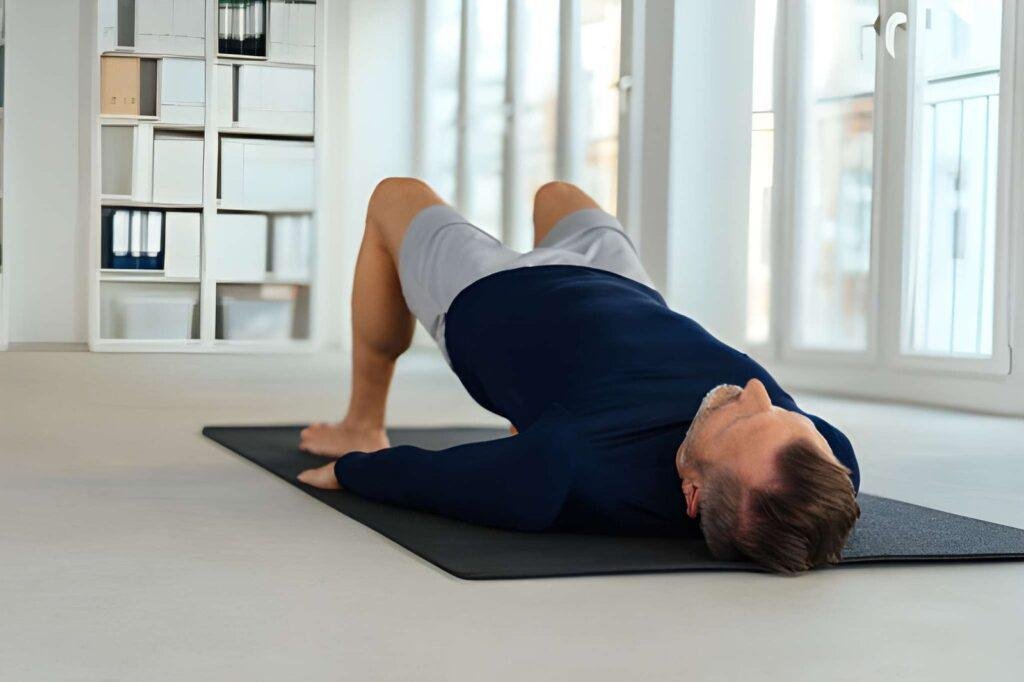
Lie down flat on your back with your knees pointing upward and imagine pulling your penis inside your body. Hold for 5 seconds, then release the position. Thereafter, clench your anus for five seconds and release. Repeat the set at least 5 to 10 times. During the exercises, you can also lift your hips, which can help strengthen your core.
2. Face-Down
Similar to what you did in the Front-Up routine, these are to be done while lying on your stomach, facing the floor. This set is also to be repeated 5 to 10 times. Vary the pace at which you can tense and relax or tighten and loosen your muscles for millisecond pulses in repetition.
3. Sideways
For the sideways Kegel exercises, lie on your side. Then place your free hand on your lower stomach. Now, squeeze the muscles that fall right under your hand touching the stomach. Hold it for 10 seconds and then relax. Replicate this 10 times. Remember, your stomach should not be doing the work. Engage with the pelvic floor to activate it.
4. Sat-Up
For this, you can use a chair or an exercise ball to raise yourself off the ground. Once you are in a comfortable sitting position, spread your legs in front of you and visualize a marble between your buttocks. Squeeze or tense your cheeks, then thrust upwards to lift the imaginary marble. Hold this for 3 seconds and release.
5. Walking
As your muscles gradually get stronger, you can do Kegel exercises even when you are walking or moving. Keep the focus on your muscles, as you practiced over the past few weeks, and tense the lower muscles, including the anus, even while walking.
The results of your Kegel exercises can be seen in a few weeks to a few months if you continue doing them regularly.
Urogen ED Burlington
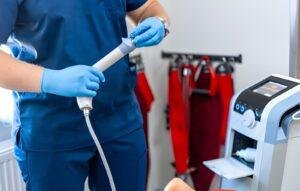
For effortless and effective relief, choose Urogen’s Wave Therapy that encourages natural healing within the body. It strengthens and restores your erectile tissue using acoustic energy, which also promotes cellular regeneration and supports healthier blood vessel function. The therapy boosts neovascularization (new vessel growth) and improves oxygen delivery and circulation. Besides, it strengthens and expands the arteries, improves nerve response and tissue flexibility, leading to long-lasting, fuller erections and better sexual satisfaction.
FAQs
Yes. You can do Kegel exercises any time once you have practiced them for a few weeks and learned how to focus on your pelvic muscles.
Absolutely. Men with premature ejaculation can do Kegel exercises to strengthen their pelvic floor muscles.
Hold your pelvic floor muscles for about 3 seconds, then release.
Do them at least 3 times a day, with 10 to 15 repetitions per set.
Reach out to Urogen Burlington for our Wave Therapy that is painless and highly effective.
Medical Disclaimer: This blog is provided for informational and educational purposes only and should not be considered medical advice, diagnosis, or treatment recommendations. The content represents general information about benign prostatic hyperplasia and related conditions based on medical knowledge and clinical experience, but every patient’s situation is unique. Prostate conditions can be serious and require proper medical evaluation and treatment. Do not use this information to self-diagnose or self-treat.
Always consult with a qualified healthcare provider, preferably a urologist, for proper evaluation, diagnosis, and treatment recommendations specific to your individual health situation. Treatment options, risks, benefits, and outcomes vary significantly between patients based on age, overall health, prostate size, symptom severity, and other medical conditions.
Medications mentioned carry specific risks and side effects that must be discussed with your doctor. Delaying proper medical care for prostate conditions can lead to serious complications, including kidney damage, bladder damage, urinary retention, and other health problems. If you experience inability to urinate, blood in urine, severe pain, or other urgent symptoms, seek immediate medical attention. This content does not create a doctor-patient relationship.